Pleated Jeans: The Complete Fit, Styling, and Buying Guide
Pleated jeans are back, and this time they are not just a throwback joke about 1980s fashion. Pleated jeans are denim trousers with folds of fabric sewn into the waistband, and those folds change how the jeans fit, move, and look. When the pleats are done well, pleated jeans give you room where you need it, a defined waist, and a smarter, more trouser-like shape than ordinary flat-front jeans. When they are done badly, pleated jeans can add unwanted bulk and make an outfit look dated. This guide explains the difference, so you can choose pleated jeans with confidence.
This article is written for everyday shoppers in the United States who want practical help, not fashion jargon. You will learn what pleated jeans are, how single, double, and reverse pleats work, how pleated jeans compare with flat-front jeans, which rise, leg shape, wash, and fabric suit you, and how to style pleated jeans for casual days, work, and evenings. You will also find a try-on checklist, common mistakes to avoid, and clear care advice to keep the pleats looking sharp.
Table of Contents
- What Are Pleated Jeans?
- Types of Pleats in Pleated Jeans
- Pleated Jeans vs Flat-Front Jeans
- A Short History of Pleated Jeans
- How to Choose Pleated Jeans That Fit Well
- Pleated Jeans for Different Body Shapes and Heights
- How to Style Pleated Jeans: 5 Easy Outfits
- Shoes, Tops, and Accessories That Work With Pleated Jeans
- Common Mistakes With Pleated Jeans
- How to Care for Pleated Jeans
- Buying Checklist for Pleated Jeans
- Conclusion
- FAQs
What Are Pleated Jeans?
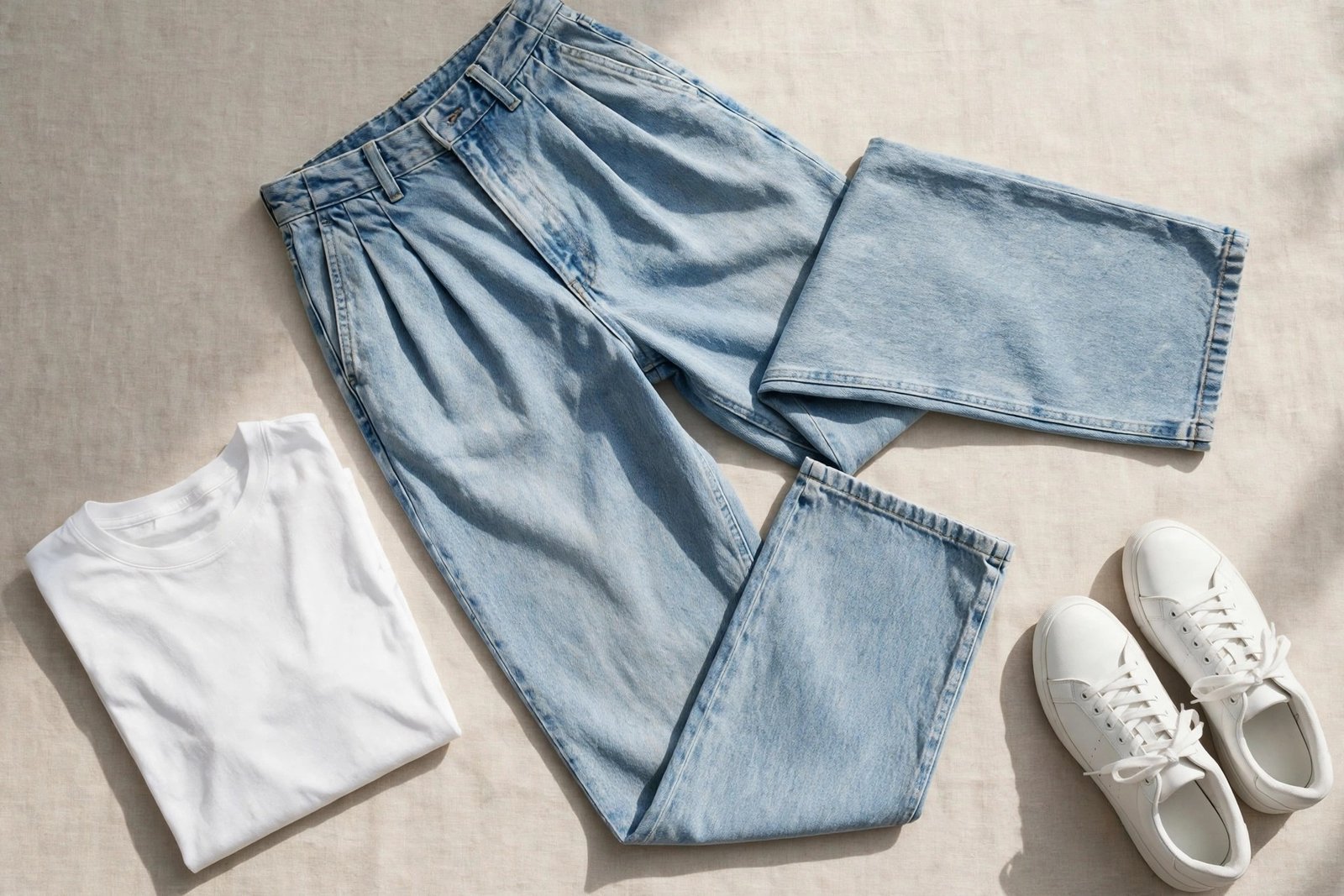
Pleated jeans are jeans with one or more pleats at the front, usually on each side of the fly. A pleat is a fold of fabric that is stitched down at the waistband and then left to open below it. That fold gives the jeans extra fabric around the waist, hips, and upper thigh, so the jeans can move with you instead of pulling tight when you sit, walk, or bend.
Think of pleated jeans as a middle ground between classic jeans and tailored trousers. Classic flat-front jeans have a smooth, clean front with no extra fabric. Tailored trousers have pleats for comfort and shape. Pleated jeans borrow that trouser idea and put it into denim, which is why many pleated jeans look more polished than a basic pair of straight-leg jeans, even when you wear them with sneakers.
Most pleated jeans are high-rise or mid-rise. The high rise helps the pleats sit neatly at your natural waist, where they can define your waistline instead of bunching at your hips. Some pleated jeans also have a paperbag waist, where the waistband gathers above a belt or tie. That style cinches the waist and makes the pleats even more visible, so it works best when you tuck in your top.
Pleated jeans are not the same as baggy jeans. Baggy jeans are loose all the way down the leg. Pleated jeans can be wide-leg, straight-leg, tapered, or barrel-leg, but the pleats themselves are only at the top. The leg shape is a separate choice, and it matters just as much as the pleats.
Types of Pleats in Pleated Jeans
Not all pleated jeans are the same. The type, size, and number of pleats change the look more than most shoppers expect.
Single pleats
Single pleated jeans have one pleat on each side of the front. This is the most subtle option. Single pleats add a little room and a clean vertical line, without a lot of extra volume. If you are trying pleated jeans for the first time, single pleats are the safest starting point.
Double pleats
Double pleated jeans have two pleats on each side. They give more room and a more obvious, structured look. Double pleats can look very smart in a straight-leg or wide-leg cut, but they can also add width at the hips if the fabric is stiff or the pleats are very deep. Choose double pleats when you want a clear fashion statement, not a barely-there detail.
Forward pleats
Forward pleats point toward the fly, or toward the center of the jeans. They tend to look neat and tailored, and they are common in trouser-style pleated jeans. Forward pleats work well in rigid or medium-weight denim, where the fold holds its shape.
Reverse pleats
Reverse pleats fold outward, toward the side pockets. They open away from the center and can feel roomier. Reverse pleats often look softer and more relaxed than forward pleats, especially in lighter denim or a tapered leg.
Paperbag pleats
Paperbag pleated jeans gather the waistband above a belt, tie, or elastic, so the top looks ruched like the top of a paper bag. The pleats below the waist are usually softer and more numerous. Paperbag pleated jeans are best with a tucked-in top, because an untucked top hides the waist detail that makes the style special.
Pleat depth also matters. A shallow pleat of about 1 to 2 centimeters adds shape without bulk. A deep pleat adds more room and drama, but it also needs good fabric and a good fit to avoid puffing out at the front. When you shop, look at the pleats while you are standing and sitting. Good pleated jeans should lie fairly flat when you stand, then open gently when you move.
Pleated Jeans vs Flat-Front Jeans
The table below gives a quick, honest comparison. Neither style is better for everyone. The right choice depends on your comfort, your shape, and the look you want.
| Feature | Pleated Jeans | Flat-Front Jeans |
|---|---|---|
| Front look | Folded fabric at the waistband, vertical lines below it | Smooth, clean front with no folds |
| Room at hips and thighs | More room, because the pleats hold extra fabric | Less room, closer fit through the front |
| Comfort when sitting | Usually more comfortable, pleats open as you move | Can pull or dig in if the fit is tight |
| Formality | More trouser-like and polished | More casual and streamlined |
| Best for | Comfort, structure, vintage-inspired or smart-casual looks | Slim, minimal, modern looks |
| Risk | Can add visual bulk if pleats are deep or fabric is stiff | Can feel restrictive if the size or stretch is wrong |
Flat-front jeans are still a great choice if you want the simplest, sleekest front. Pleated jeans are the better choice if you want extra room without going fully baggy, or if you like the tailored look of trousers in a denim fabric. Many people own both, and use pleated jeans when they want comfort and polish, and flat-front jeans when they want a clean, slim line.
A Short History of Pleated Jeans
Pleats in trousers are much older than pleated jeans. Pleated trousers were common in men’s formal and everyday clothing in the late 1800s and early 1900s, because pleats gave room for movement before stretch fabrics were common. Flat-front trousers became more popular in the mid-1900s, as fashion moved toward a slimmer, more modern line.
Pleated jeans became a visible trend in the 1980s, when high-waisted, relaxed denim was everywhere. That 1980s version is the one many people remember, and it is also the reason some shoppers still think of pleated jeans as old-fashioned. In 2019, fashion coverage from Who What Wear noted pleated jeans returning as a trend, with street-style wearers pairing them with bodysuits, blazers, and simple tops. The modern version is usually sleeker than the 1980s version: higher and neater at the waist, with a tapered, straight, or wide leg, rather than a shapeless, oversized fit.
Today, pleated jeans appear in many forms, from high-rise wide-leg styles to pleated barrel jeans with a cropped, tapered ankle. That variety is good news. It means pleated jeans are no longer one single look. You can choose a subtle single pleat in a straight leg for work, or a bold double pleat in a wide leg for a fashion-forward weekend outfit, and both count as pleated jeans.
How to Choose Pleated Jeans That Fit Well
Fit is where pleated jeans succeed or fail. Use the steps below in a store or at home, and do not rely on your usual size alone, because pleat depth and rise change how a size feels.
1. Start with rise
Rise is the distance from the crotch to the top of the waistband. High-rise pleated jeans sit at or above your natural waist. Mid-rise pleated jeans sit below the waist and above the hips. For most people, high-rise pleated jeans work best, because the pleats are designed to sit at the waist. Low-rise pleated jeans are rare, and they often cut the body in an awkward place, so try them only if you already know that rise suits you.
2. Check the waist first, then the hips
Put the jeans on and fasten them without pulling hard. The waistband should sit flat and stay in place when you walk, without a belt holding it up. Then check the hips and upper thighs. The pleats should lie mostly flat when you stand. If they puff out strongly while you are just standing, the waist may be too tight, the pleats may be too deep, or the fabric may be too stiff for that cut.
3. Sit down before you decide
This step matters more for pleated jeans than for flat-front jeans. Sit, cross your legs if you normally do, and stand up again. The pleats should open when you sit and settle back when you stand. If the front bunches, pulls at the fly, or feels tight across the stomach when you sit, try a larger size or a different pleat style, not just a different wash.
4. Choose the leg shape on purpose
- Straight leg: The most versatile leg for pleated jeans. It balances the pleats without adding more volume.
- Tapered leg: Narrows toward the ankle. Good if you want pleated jeans to look neat with sneakers, loafers, or ankle boots.
- Wide leg: Adds drama and movement. Best with a tucked-in, fitted top and shoes that are not hidden completely by the hem.
- Barrel leg: Wide through the knee and tapered at the ankle, often cropped. This is a strong trend shape, but try it on carefully, because the balloon shape plus pleats can add a lot of volume.
- Cropped leg: Shows the ankle. Good for warmer weather and for showing off shoes, but check the inseam, because a cropped leg that is too long can look like a mistake.
5. Feel the fabric
Rigid denim, with little or no stretch, holds pleats crisply and looks more tailored, but it needs a break-in period and a precise fit. Stretch denim, usually cotton with a small amount of elastane, is more forgiving and comfortable from the first wear, but very stretchy denim can lose the crisp pleat shape over time. Medium-weight denim is a good middle ground for most pleated jeans. Very heavy denim can make deep pleats feel stiff, while very light denim may not hold a pleat at all.
6. Check the wash
Light-wash pleated jeans look casual and summery, and they draw more attention to the pleat area because light fabric shows folds clearly. Mid-wash pleated jeans are the easiest to dress up or down. Dark-wash pleated jeans look smartest and most trouser-like, and they are a good first pair if you want pleated jeans for work or evenings.
Pleated Jeans for Different Body Shapes and Heights
There is no single rule that works for every body, and you should not let a size chart decide for you. The guidance below is a starting point for trying things on, not a set of fashion laws.
If you have wider hips, start with single pleats, a straight or tapered leg, and a medium-weight fabric. Small pleats add room without adding a lot of visual width. Avoid very deep double pleats in stiff fabric if you do not want extra volume at the front.
If you have a defined waist, high-rise pleated jeans can be very flattering, because the waistband and pleats draw attention to the waist and lengthen the leg line. A paperbag waist can work well here too, as long as you tuck in your top.
If you are petite, or shorter in the leg, a tapered or cropped pleated jean often works better than a very wide, full-length leg, which can overwhelm your frame. Check the inseam, and do not be afraid to hem pleated jeans, as long as the tailor keeps the leg shape balanced. A pointed shoe or a heel can also help lengthen the line, but it is not required.
If you are tall, wide-leg pleated jeans can look especially good, because you have the leg length to carry the volume. A full-length wide leg with a fitted top is a simple, elegant combination.
If you carry weight around the stomach, pleated jeans can actually help, because the pleats give room instead of pulling tight. Look for a waistband that sits comfortably without digging in, and for pleats that lie flat when you stand. A dark wash and a straight leg are often the most comfortable and flattering combination here.
The most important test is always the same: do the pleated jeans feel comfortable when you sit, walk, and bend, and do you like how they look from the front and the side in a mirror? If the answer is yes, the label on the style does not matter.
How to Style Pleated Jeans: 5 Easy Outfits
The golden rule for pleated jeans is balance. Pleated jeans already have volume and detail at the top, so your top should usually be fitted, tucked in, or cropped. That does not mean you can only wear tight tops. It means the waist of the pleated jeans should stay visible, so the outfit keeps its shape.
Outfit 1: Casual weekend
Pair mid-wash straight-leg pleated jeans with a tucked-in white T-shirt, white sneakers, and a denim jacket or a light bomber jacket. Roll the hem once if the jeans are a little long. This is the easiest first outfit for pleated jeans, and it works for errands, lunch, and casual meetups.
Outfit 2: Smart casual for work
Pair dark-wash pleated jeans with a tucked-in blouse or a fitted knit top, a tailored blazer, and loafers or pointed flats. The blazer adds structure to your upper body and balances the pleats, while the dark wash keeps the look polished. This outfit works in many offices that allow denim, but check your workplace dress code first.
Outfit 3: Evening out
Pair black or very dark pleated jeans with a cropped top or a bodysuit, heeled sandals or pointed heels, and a small bag. Keep jewellery simple, because the pleats are already a detail. A bodysuit is especially useful with pleated jeans, because it stays tucked in and keeps the waistline clean all evening.
Outfit 4: Summer daytime
Pair light-wash pleated jeans, cropped or tapered, with a tucked-in tank top or a short-sleeve knit, sandals or espadrilles, and sunglasses. A light wash and a shorter leg keep pleated jeans cool in warm weather. Avoid a very oversized top here, or the outfit can lose its shape.
Outfit 5: Cool-weather layering
Pair pleated jeans with a fitted turtleneck tucked in, a wool coat or a long blazer, and ankle boots. The turtleneck keeps the waist defined under layers, and boots work well with a straight or tapered leg. If you wear wide-leg pleated jeans, choose boots with a slimmer shaft so the leg can fall cleanly over them.
Shoes, Tops, and Accessories That Work With Pleated Jeans
Shoes
- Sneakers: Clean, low-profile sneakers work best. Very chunky sneakers can make pleated jeans look bottom-heavy, especially with a wide leg.
- Loafers: A classic match for the trouser-like feel of pleated jeans.
- Pointed flats or heels: Lengthen the leg and sharpen the outfit, especially with a straight or wide leg.
- Ankle boots: Work well with tapered and cropped pleated jeans, and with a straight leg that sits just above the boot.
- Sandals: Simple strappy sandals work for summer pleated jeans. Avoid very heavy platform sandals if the pleats are already bold.
Tops
- Bodysuits: Stay tucked in and balance pleat volume.
- Fitted T-shirts and knits: The safest everyday choice.
- Blouses with a defined waist: Tuck them in and let the waistband show.
- Cropped tops: Work well with high-rise pleated jeans, because they show the waistband without needing a tuck.
- Oversized tops: Use with care. If you wear one, try a front tuck, or choose a shorter oversized top that does not hide the whole waistband.
Accessories
- Belts: A slim belt can define the waist of pleated jeans and keep the pleats neat. A very wide, heavy belt can fight with the pleats, so start slim.
- Bags: A crossbody bag or a structured tote works well. A very large, slouchy bag plus wide-leg pleated jeans can add too much volume at once.
- Jewellery: Keep it simple. The pleats are the main detail, so one or two pieces are usually enough.
Common Mistakes With Pleated Jeans
1. Hiding the waist
Wearing a long, untucked, oversized top over high-rise pleated jeans hides the waistband and the pleats, and the outfit can look shapeless. Tuck in, front-tuck, or choose a cropped top.
2. Choosing pleats that are too deep for the fabric
Deep pleats in stiff, heavy denim can puff out and add bulk. If the pleats do not lie fairly flat when you stand, try a shallower pleat or a softer fabric.
3. Pairing volume with volume
Wide-leg pleated jeans plus an oversized top plus chunky shoes is a lot of volume in one outfit. Balance one voluminous piece with fitted pieces elsewhere.
4. Ignoring the sit test
Pleated jeans that look good standing can feel very different sitting down. Always sit, walk, and bend before you buy pleated jeans.
5. Buying the wrong inseam
A leg that is too long will bunch at the ankle and hide your shoes. A leg that is too short can look accidental, unless it is a deliberate cropped style. Check the inseam in the product details, and compare it with jeans you already own and like.
6. Washing pleated jeans like ordinary jeans
High heat and harsh drying can distort pleats. Follow the care steps below, especially for rigid denim with crisp pleats.
How to Care for Pleated Jeans
Good care keeps pleated jeans looking intentional, not messy. Denim care is simple, but pleats need a little extra attention.
- Wash less often. Jeans do not need washing after every wear. Spot-clean small marks, air them out, and wash only when they truly need it. This also helps the colour last longer.
- Wash inside out in cold water, on a gentle cycle. Cold water protects the colour and the fabric, and turning pleated jeans inside out reduces friction on the pleat folds.
- Use a mild detergent, and skip fabric softener if you want crisp pleats. Softener can coat denim and soften the fold.
- Hang dry or lay flat when you can. Tumble drying on high heat can shrink denim and distort pleats. If you must use a dryer, use low heat and take the pleated jeans out while slightly damp.
- Iron or steam the pleats carefully. If the pleats look soft after washing, press them lightly from the inside, following the original fold line. Do not iron over the pleats at very high heat, and test on a small area first if you are unsure.
- Store pleated jeans folded or hung by the waistband, not crammed into a drawer. Hanging helps the pleats fall naturally and reduces deep creases in the wrong places.
Buying Checklist for Pleated Jeans
Use this checklist before you buy pleated jeans, online or in a store.
- Rise: High-rise or mid-rise? Does the waistband sit where you want it?
- Pleat type: Single, double, forward, reverse, or paperbag? Is the pleat depth shallow or deep?
- Leg shape: Straight, tapered, wide, barrel, or cropped? Does it balance the pleats?
- Fabric: Rigid, medium, or stretch? What is the cotton and elastane mix on the label?
- Wash: Light, mid, or dark? Does the wash suit the occasions you have in mind?
- Waist fit: Does the waistband stay flat and comfortable without a belt holding it up?
- Sit test: Do the pleats open when you sit and settle when you stand?
- Inseam: Does the length work with the shoes you will actually wear?
- Pockets: Do the front pockets lie flat, or do they gape because of the pleats?
- Stitching and hardware: Are the seams, rivets, buttons, and zips neat and strong?
- Return policy: If you buy online, can you return or exchange pleated jeans if the fit is wrong? Check this before you order, because fit varies a lot between brands.
A note on prices and brands: Prices, sizes, and stock change often, and they differ by store and country. This guide does not list current prices, because a price copied today could be wrong tomorrow. Check the retailer’s own product page for the current price, size range, and fabric details before you buy.
Conclusion
Pleated jeans are not a difficult trend to wear, once you understand what the pleats do. Pleated jeans give you extra room at the waist and hips, a defined waistline, and a smarter, trouser-like shape than flat-front jeans. The best pleated jeans for you will depend on pleat type, rise, leg shape, fabric, and wash, not on a single trend photo. Start with single pleats, a high or mid rise, and a straight or tapered leg if you are new to pleated jeans. Tuck in your top, balance volume with fitted pieces, and always do the sit test before you decide.
When you choose well, pleated jeans are comfortable, versatile, and easy to style, from a casual weekend outfit to a smart work look or an evening out. When you choose badly, usually because the pleats are too deep, the waist is wrong, or the top hides the whole shape, pleated jeans can look bulky and dated. Use the checklists in this guide, try pleated jeans on with the shoes you will actually wear, and let comfort and proportion guide you. That is how pleated jeans stop being a trend you worry about, and become a pair of jeans you actually reach for again and again.
FAQs
1. What are pleated jeans?
Pleated jeans are jeans with folds of fabric sewn into the waistband at the front. The pleats give extra room around the waist, hips, and upper thighs, and they give pleated jeans a more tailored, trouser-like look than flat-front jeans.
2. Are pleated jeans in style in 2026?
Pleated jeans have returned as a fashion trend since their 1980s peak and their 2019 revival, and they now appear in many cuts, including wide-leg, tapered, straight, and barrel styles. Trends vary by store and season, so check current collections, but pleated jeans are no longer just a retro novelty.
3. Do pleated jeans make you look bigger?
Pleated jeans can add visual width if the pleats are very deep, the fabric is stiff, or the fit is wrong. Single, shallow pleats in a straight or tapered leg, with a tucked-in fitted top, usually do not add much bulk. The sit test and a mirror check are the best ways to judge a specific pair.
4. What is the difference between pleated jeans and flat-front jeans?
Pleated jeans have folded fabric at the waistband that opens below it, giving more room and a structured look. Flat-front jeans have a smooth front with no folds, giving a sleeker, more minimal look and usually a closer fit.
5. Should I tuck in my top with pleated jeans?
In most cases, yes. Tucking in, front-tucking, or wearing a cropped top or bodysuit keeps the waistband and pleats visible and keeps the outfit balanced. A long, untucked oversized top can hide the shape of pleated jeans.
6. What shoes go best with pleated jeans?
Clean sneakers, loafers, pointed flats or heels, ankle boots, and simple sandals all work, depending on the leg shape. Tapered and cropped pleated jeans suit ankle boots and sneakers well, while straight and wide-leg pleated jeans suit loafers, pointed shoes, and heels.
7. Are pleated jeans comfortable?
Yes, when they fit well. The pleats are designed to give room and movement, especially when you sit. If pleated jeans feel tight across the stomach or pull at the fly, try a different size, rise, or pleat depth, rather than assuming all pleated jeans are uncomfortable.
8. What is the difference between single and double pleats?
Single pleated jeans have one pleat on each side and look more subtle. Double pleated jeans have two pleats on each side, give more room, and look more structured and noticeable.
9. How do I wash pleated jeans without ruining the pleats?
Wash pleated jeans inside out in cold water on a gentle cycle, with a mild detergent. Hang dry or lay flat when possible, avoid high heat, and press the pleats lightly from the inside if they soften after washing.
10. Can I wear pleated jeans to work?
It depends on your workplace dress code. Dark-wash, straight-leg or tapered pleated jeans with a tucked-in blouse or knit top and a blazer can look smart and professional in many offices that allow denim. Check your dress code first, and choose a neat, dark pair for work.
Sources
For further reading on pleated versus flat-front styles, see Pant Project, Who What Wear, and The Social Fabric.
To learn more about this site, visit our About Us page, or get in touch via our Contact Us page.